Warlock: Dungeons & Dragons is approaching magic systems differently than the genre standard. Rather than casting spells as straightforward solutions to predetermined problems, the game frames magic as a flexible toolkit within an open world. Players aren't expected to match specific spells to specific obstacles; instead, magic becomes a variable system where creative application drives player agency. This philosophy stands apart from conventional design, where spells typically function as direct counters to environmental or enemy challenges.
The approach signals a potential shift in how open-world games might handle magical gameplay going forward. By prioritizing emergent problem-solving over scripted spell-use, Warlock aims to give players genuine freedom in tackling objectives, whether combat, exploration, or environmental puzzles.
- Magic operates as an open-ended toolbox rather than a lock-and-key system, allowing players to experiment beyond intended solutions.
- The design philosophy encourages emergent gameplay that other open-world titles could learn from.
- Spells gain utility through creative application rather than serving singular, predetermined functions.
All coverage

 AllKeyShop
· Aug 29, 15:42 UTC
AllKeyShop
· Aug 29, 15:42 UTC
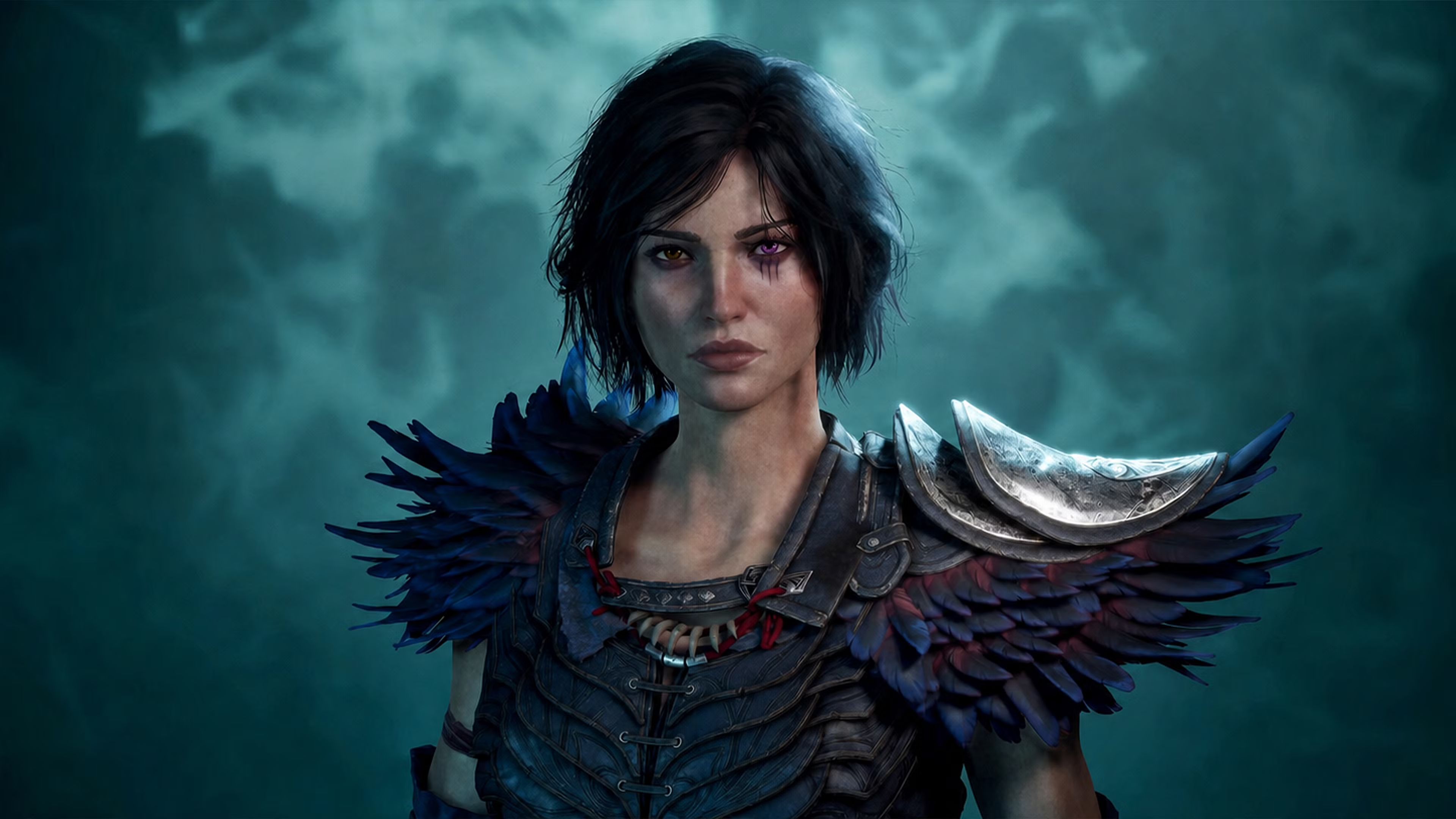
Warlock brings single-player swordplay and reactive magic to Dungeons & Dragons in 2027
Wizards of the Coast and developer Invoke Studios presented the first full gameplay showcase for Warlock: Dungeons & Dragons during Gamescom 2026. The eight-minute demonstration detailed an action-heavy interpretation of the iconic tabletop…
 GameRant
· Aug 28, 16:45 UTC
GameRant
· Aug 28, 16:45 UTC
Warlock: Dungeons & Dragons Is Treating Magic the Way More Open-World RPGs Should
Warlock's latest gameplay shows Dungeons & Dragons iconic magic as a wildly promising emergent open-world toolbox — one other open-worlds should note.
 Major Nelson Xbox
· Aug 28, 14:00 UTC
Major Nelson Xbox
· Aug 28, 14:00 UTC
Warlock: Dungeons & Dragons – The Open World Adventure Making Magic More… Magical
Magic, in most games, is treated like a key for a lock – a spell performs a set function. Ice getting in the way? Melt it with fire. Enemy covered in armor? Hit them with lightning. Warlock: Dungeons and Dragons, on the other hand, treats m…